
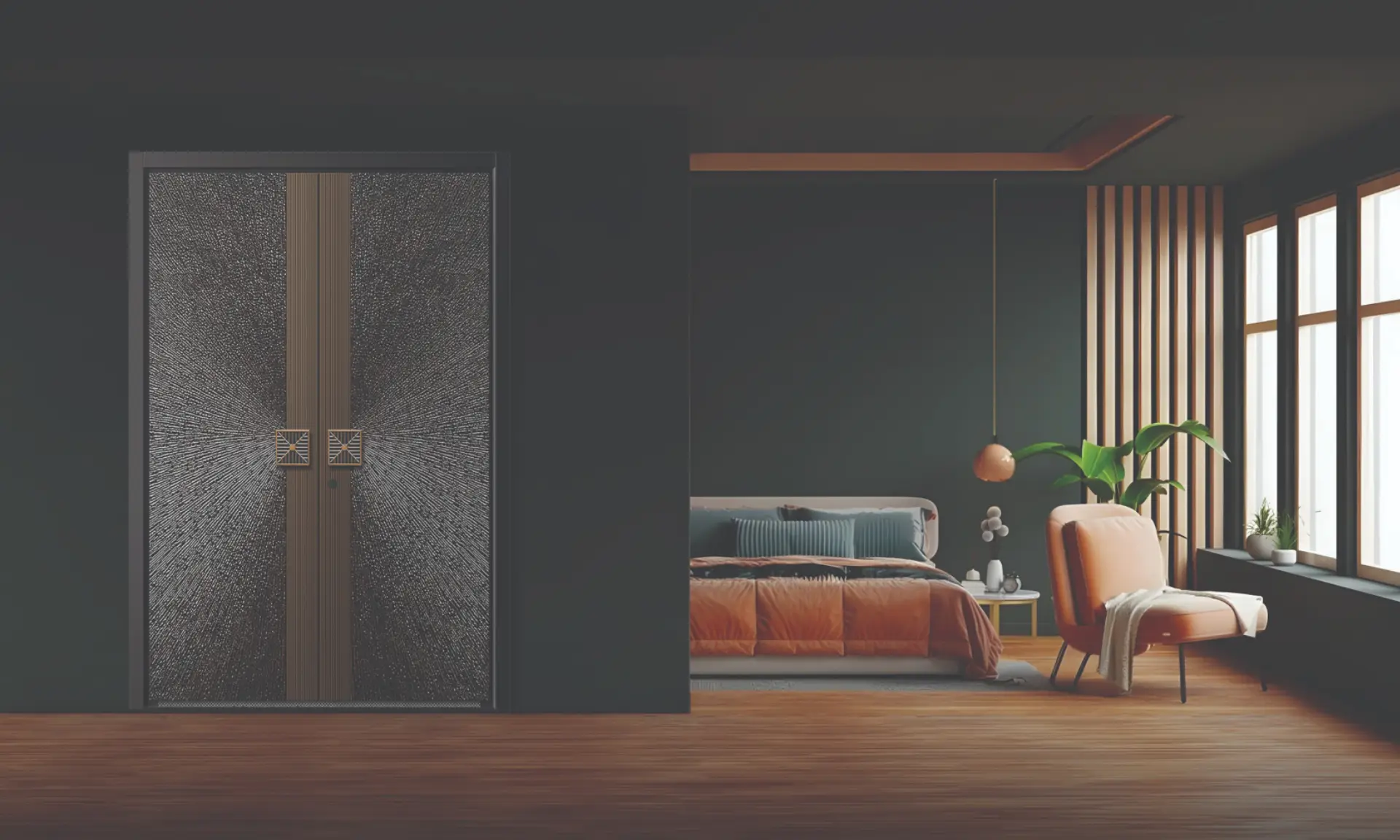
Choosing the right main entrance door is one of the most significant decisions you will make when building a new home or undertaking a major renovation. Your front door is much more than a simple point of entry, it acts as the primary shield for your family’s security, anchors your home’s architectural identity, keeps out external elements, and directly impacts your property’s long-term resale value.
For decades, the standard choice for residential properties was straightforward: solid timber. However, material engineering has shifted dramatically. As we navigate the architectural trends of 2026, modern steel doors have undergone an incredible evolution, offering high-end luxury aesthetics, cutting-edge biometric security integration, and unmatched resilience against the elements. If you are stuck trying to decide between a steel door vs a wooden door, this comprehensive, side-by-side breakdown will help you make an informed investment for your household.
Steel Door vs Wooden Door
For most modern homes in 2026, steel doors are the better choice because they offer superior security, durability, weather resistance, and require less maintenance than wooden doors. Wooden doors remain a good option for those who value traditional aesthetics, but they generally need more care to maintain their appearance and performance over time.
Steel Door vs Wooden Door: A Comparison
To understand how these two dominant materials perform under daily pressure, let’s look at their core attributes side-by-side:
| Performance Metric | Premium Steel Doors (e.g., i-Leaf) | Traditional Solid Wooden Doors |
| Intrusion Security | Exceptional (Impact-resistant steel + multi-point locks) | Good (Dependent on timber hardness & frame age) |
| Structural Lifespan | Decades (Will not warp, split, sag, or bow over time) | Variable (Highly dependent on climate and care) |
| Weather Resistance | Excellent (Immune to monsoons and intense humidity) | Moderate (Absorbs moisture, leading to swelling) |
| Termite & Pest Immunity | 100% Immune (Inorganic composition) | High Risk (Requires periodic chemical treatments) |
| ssMaintenance Overhead | Very Low (Simple occasional wipe-down with Soft dry cloth) | High (Needs regular sanding, painting, or varnishing) |
| Smart Lock Integration | Seamless (Pre-engineered lock cases preserve strength) | Variable (Chiseling out timber can weaken the stile) |
1. Home Security & Forced Entry Resistance
When it comes to safeguarding your family, a steel entry door offers an unyielding advantage. Steel possesses inherently higher tensile strength than even the densest hardwoods like teak or mahogany. Modern premium i-leaf steel doors are engineered with internal steel stiffeners and reinforced anti-pry plates around the lock zones, making them virtually immune to heavy impacts, crowding, or crowbar attacks. Furthermore, they are manufactured to accommodate complex multi-point locking mechanisms that lock the door into the frame at three, five, or seven distinct points simultaneously.
Wooden doors can certainly provide adequate protection, but they have natural weak points. Over time, wood fibers age, dry out, or absorb moisture, causing the material around the hinges and deadbolts to soften or split slightly. Furthermore, a determined intruder can split wood along its natural grain far more easily than they can pierce structural steel sheeting.
2. Lifespan and Weathering in Varied Climates
India’s climate is notorious for putting exterior building materials to the test. Coastal regions struggle with salt-laden humidity, while inland zones experience torrential monsoon downpours followed by blistering summer heat waves.
Wood is an organic, porous material that acts like a sponge. During the monsoons, wooden doors absorb airborne moisture, causing them to swell, jam inside their frames, and scrape across floors. In the dry summer months, that same moisture evaporates, causing the wood to shrink, crack, and pull away from its seals. This constant expansion and contraction cycle rapidly ages the door.
Modern steel doors, especially those constructed from high-grade Galvalume, Galvanized and Cast aluminum steel, are entirely immune to moisture absorption. They retain their perfect millimetric proportions year-round, ensuring smooth opening and closing operations whether it is pouring rain outside or boiling hot.
3. The Reality of Maintenance Costs
Many homeowners forget to factor in the long-term cost of upkeep when buying a door. A wooden door requires consistent care to look its best. Every 2 to 4 years, a solid wood door must be unhinged, sanded down, treated for termites, and given fresh coats of expensive polyurethane lacquer or exterior paint. Neglecting this maintenance loop allows moisture to seep deep into the core, causing permanent rot.
Steel doors are famously low-maintenance. They feature factory-baked powder coatings or advanced thermal sublimation finishes that resist UV fading, peeling, and chipping. You don’t need to sand, paint, or varnish them. A simple routine wipe-down with a damp microfiber cloth and mild soap is all that is required to keep them looking brand new for years.
4. Style, Design, and The “Wood Look”
The primary argument in favor of wooden doors has always been their classic, authentic texture. However, design technology in 2026 has narrowed this gap completely.
Through advanced heat transfer printing and embossing techniques, high-quality steel doors now feature incredibly realistic wood-finish textures. Whether you prefer the golden hues of premium Teak, the dark elegance of Walnut, or the deep tones of Mahogany, modern steel doors replicate the grain, knots, and warmth of natural timber so perfectly that it is difficult to spot the difference without touching the surface. Additionally, steel allows for ultra-modern, crisp geometric lines, laser-cut metallic inserts, and flush handle designs that are structurally impossible to pull off neatly with wood.
Which Door Is Better for Different Types of Homes?
The right choice often depends on your home’s design and location.
| Home Type | Recommended Choice |
| Apartment | Steel Door |
| Independent House | Steel Door |
| Contemporary Home | Steel Door |
| Villa | Steel Door with premium finish |
| Coastal Home | Corrosion-resistant Steel Door |
| Traditional Home | Wood-finish Steel Door or Wooden Door |
For most modern homes, steel doors provide an excellent balance of style, security, and durability. Homeowners who appreciate a classic wooden appearance can also consider wood-finish steel doors, which combine the visual appeal of timber with the strength of steel.
Common Misconceptions About Modern Steel Doors
● Myth 1: “Steel doors look too industrial for residential homes.” This is no longer true. Modern manufacturing allows for intricate geometric routing, glass panel integration, and gorgeous wood-grain finishes that blend beautifully into upscale neighborhoods.
● Myth 2: “Steel doors will rust within a couple of years.” While cheap, untreated iron doors are prone to rust, high-quality entrance systems utilize zinc-coated galvanized steel combined with multi-layer protective primers. This structural protection blocks oxygen and moisture from ever reaching the base metal, even in humid coastal cities.
● Myth 3: “Steel doors absorb heat and make the house hot.” Premium steel doors are not hollow sheets of metal. They feature a sandwich construction containing dense, energy-efficient insulating cores (like polyurethane foam or rock wool). This layer actually provides superior thermal and acoustic insulation compared to many standard wooden doors.
Which Door Should You Choose?
Both steel and wooden doors have their advantages, but the right choice depends on your priorities.
If you value traditional aesthetics and are comfortable with regular maintenance, a quality wooden door can be a beautiful addition to your home. However, if you’re looking for enhanced security, long-term durability, weather resistance, and minimal upkeep, a steel door is the more practical choice for most homeowners in 2026. If you’re also deciding whether investing in a premium entry door is worthwhile, read our guide on Luxury Door vs Standard Door: Is the Premium Worth It? to understand the differences in features, performance, and long-term value.
At i-Leaf Steel Doors, we understand that every home has unique design preferences and functional requirements. That’s why our range of steel doors combines modern aesthetics, reliable performance, and durable construction to help homeowners create secure and welcoming entrances built to last.
Frequently Asked Questions
For most modern homes, steel doors offer better security, durability, weather resistance, and lower maintenance. Wooden doors remain a popular choice for their natural appearance but require more upkeep over time.
Quality steel doors manufactured with galvanized or Galvalume steel and protective finishes are designed to resist corrosion and perform well in different climates when properly maintained.
Corrosion-resistant steel doors are generally the better choice for coastal regions because they are designed to withstand humidity and salty air more effectively than untreated wood.
Yes. Modern steel doors are available with realistic wood-grain finishes that replicate the appearance of natural timber while offering the strength and durability of steel.
Steel doors require significantly less maintenance than wooden doors. Regular cleaning is usually sufficient, whereas wooden doors often need periodic polishing, sealing, or repainting to maintain their appearance.