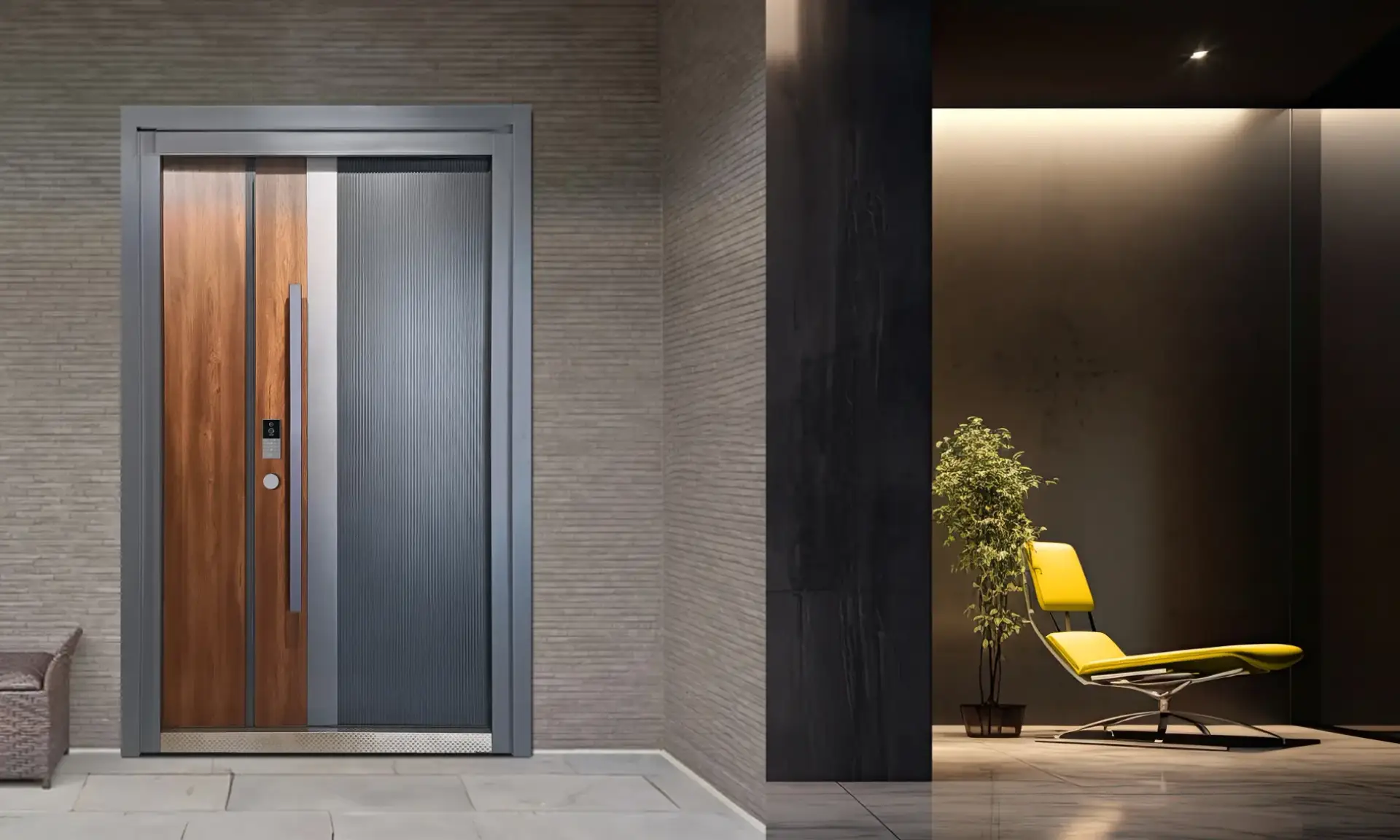
When choosing doors for a new home or renovation, WPC doors vs wooden doors is a comparison worth making. Wood has been a traditional choice for generations, but WPC doors are becoming an alternative for homeowners who want a timber-like appearance with better resistance to moisture, termites and borers.
Both materials have advantages. Wooden doors offer natural character and a familiar premium appearance, while WPC doors are designed to reduce some of the maintenance concerns associated with timber.
So, which is better for your home? The answer depends on where the door will be used, the level of moisture and termite exposure, your design preference and how much maintenance you are comfortable with.
WPC doors are the better choice for humid or termite-prone areas such as bathrooms, utility rooms and coastal or high-rainfall regions like Kerala, because they resist moisture, termites and borers and need little upkeep. Solid wood is better if you want authentic grain and character and can maintain it.
What is a WPC door?
WPC (Wood Plastic Composite) is a composite designed to look like timber while avoiding wood’s common problems. It can be painted or polished for a wood-like finish. i-LEAF WPC doors and frames are waterproof, termite- and borer-resistant, and have high screw-holding capacity.
WPC vs wooden doors: side-by-side
| Feature | WPC doors | Wooden doors |
| Moisture | Highly resistant | Can swell or warp unless well treated |
| Termites and borers | Resistant by design | Need chemical treatment and upkeep |
| Maintenance | Low | Periodic repolishing or repainting |
| Look | Wood-like, paintable or polishable | Real grain and texture |
| Screw-holding | High | Good, depending on species |
| Design flexibility | Good | Excellent (carving, custom profiles) |
| Upfront cost | [Ask for quote] | Varies widely by timber |
| Long-term cost | Lower upkeep | Higher upkeep in humid areas |
Performance varies by construction, timber species, finish and installation.
Which is better in humid areas like Kerala?
WPC. Prolonged humidity can make poorly protected timber swell and lose its finish, while WPC is built to handle moisture. Ask about the frame as well as the shutter, and make sure water cannot pool at the base. Read our guide to choosing Best main door for Kerala homes.
Which is more termite-resistant?
WPC doors and frames are designed to resist termites and borers. Wood can be protected with treatment, but that protection needs upkeep. If termites are a concern, check both the door and the frame.
Which needs less maintenance?
WPC, in moisture-prone applications. Wood needs periodic attention to polish, paint and coating. WPC can also be painted or polished, without relying on natural timber.
Which looks better?
It’s a matter of taste. Real timber’s grain is hard to duplicate exactly. WPC gives a convincing timber-like look for modern homes where performance matters as much as appearance.
Is WPC stronger than wood?
Neither is universally stronger, since timber species and WPC constructions both vary. Judge the whole door by thickness, frame strength, hinges, hardware compatibility, screw-holding capacity and installation.
Cost: is WPC worth it?
WPC is often priced above basic timber or plywood doors, but it tends to save money over time because there is less repainting, repair and termite treatment. Compare like with like: same size, thickness and frame. Get a WPC quote.
Where WPC falls short
- It won’t match the character of premium hardwood.
- Carving and very intricate profiles are more limited.
- Quality varies between manufacturers, so check thickness, construction and warranty.
- For a fully exposed main door, consider a steel or premium door and check the manufacturer’s guidance.
Best door for each room
| Room | Recommended | Why |
| Bathroom | WPC or fibre | Moisture and termite resistance ([Link: best door for bathroom in India]) |
| Kitchen/utility | WPC or fibre | Humidity and cleaning |
| Bedroom | WPC or wood | Both work, so choose by look and budget |
| Main entrance | Steel, premium wood or WPC | Depends on security needs and exposure |
Why Choose i-LEAF WPC Doors?
i-LEAF WPC doors and frames are engineered for applications where resistance to moisture and wood-related problems is important.They are designed to be waterproof, termite- and borer-resistant, while their high screw-holding capacity supports secure hardware installation.
The doors can be painted or polished for a timber-like appearance, giving homeowners flexibility in matching them with their interior design.
FAQs
Are WPC doors better than wooden doors?
WPC doors can be a better practical choice when moisture, termites, borers and maintenance are concerns. Wooden doors may be preferable if natural timber appearance and texture are the priority.
Are WPC doors good for Indian homes?
Yes. WPC doors can be suitable for Indian homes, particularly in areas where humidity, moisture and termites are concerns. The correct product should be selected according to the intended application.
Are WPC doors suitable for bathrooms?
Yes. WPC doors can be suitable for bathrooms because of their water-resistant and termite-resistant properties. Proper installation and drainage around the door are still important.
Do WPC doors look like wooden doors?
WPC doors can be finished to achieve a timber-like appearance. Painting and polishing options can provide different looks, although the appearance will not be identical to every type of natural wood.
Do WPC doors require maintenance?
WPC doors generally require less maintenance than natural wood in moisture-prone applications. However, the finish, hardware and installation should still be maintained according to the manufacturer’s recommendations.
Are WPC doors completely waterproof?
Product specifications vary, so homeowners should confirm the manufacturer’s stated water-resistance properties. The frame, edges and installation also need to be considered because water exposure can affect the complete door assembly.