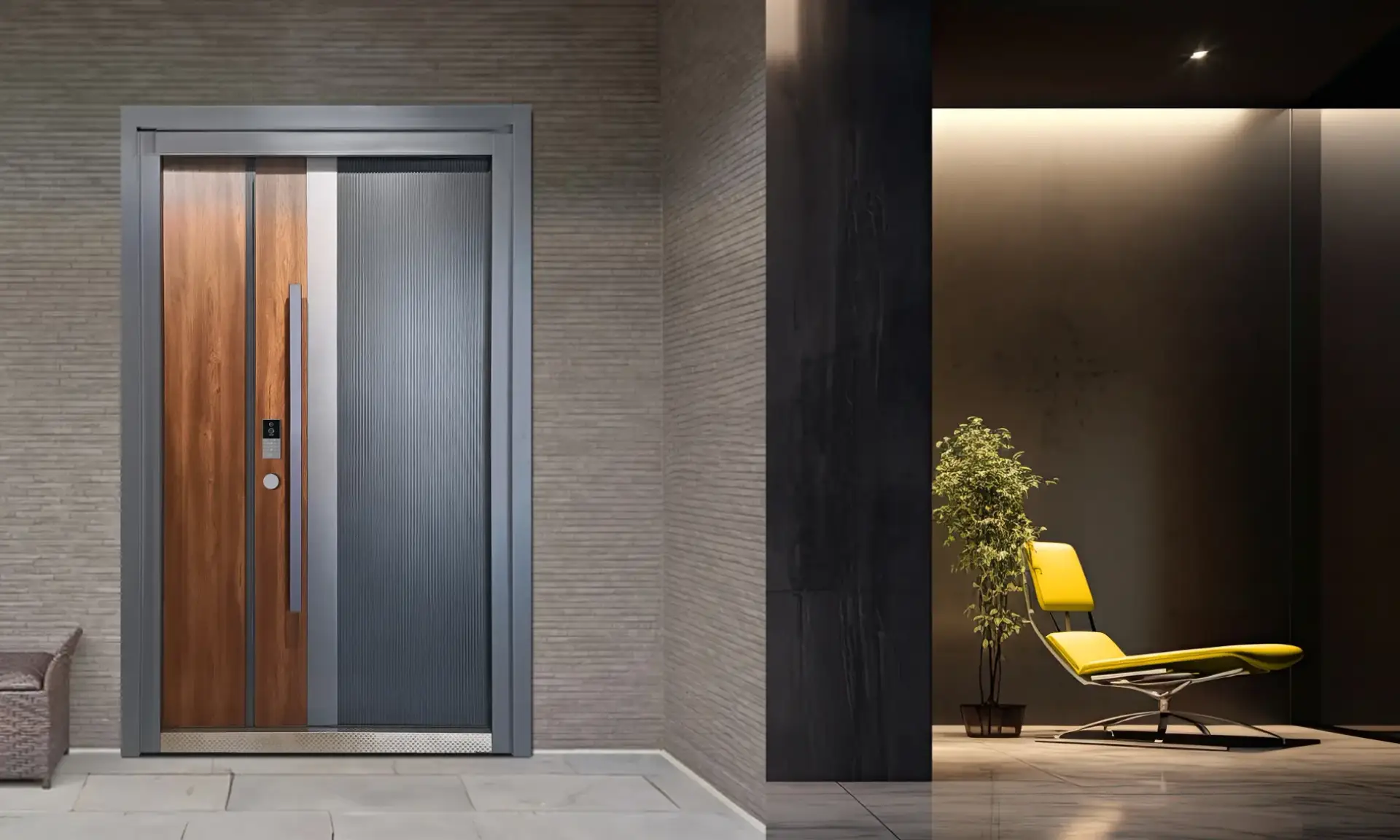
Choosing the best door for a bathroom in India is different from choosing a bedroom or main entrance door. Bathrooms are exposed to moisture, humidity, splashes and frequent cleaning, so the door material needs to handle these conditions without swelling, rotting or requiring constant maintenance.
WPC, fibre and PVC are three common options for bathroom doors. Each has its own advantages, and the right choice depends on moisture exposure, durability, appearance, maintenance and budget.
The best bathroom door in India is a moisture-proof one that won’t swell, rot or attract termites. WPC suits buyers who want a solid, wood-like look. Fibre (FRP) is best for a lightweight, low-maintenance door. PVC works on a tight budget. Whichever you pick, the frame matters as much as the door.
Why bathroom doors fail in Indian homes
A bathroom door faces steam, splashes, wet floors and frequent cleaning. Ordinary plywood or timber doors swell, warp and rot at the bottom edge, often within a few monsoons.
Check these before you buy:
- Moisture and humidity resistance
- Resistance to swelling and warping
- Termite resistance
- Ease of cleaning
- Weight and installation
- Appearance and cost
A “waterproof” label alone isn’t enough. What matters is how the shutter, frame, edges and hardware handle moisture as a system.
WPC doors for bathroom
WPC (Wood Plastic Composite) doors are designed as a replacement for wooden doors. Explore i-LEAF WPC doors and frames.

- Waterproof, termite- and borer-resistant
- High screw-holding capacity, so hinges and locks stay secure
- Can be painted or polished like timber
- Available in different sizes and thicknesses
Best for: Homeowners who want a durable, premium-looking bathroom door.
Fibre (FRP) doors for bathrooms
Fibre Reinforced Plastic doors are lightweight and moisture-resistant. See i-LEAF fibre doors.
- Made for bathrooms, kitchens and other humid areas
- Easy to wipe clean
- Available in wood-colour finishes and customisable

Best for: Bathrooms where light weight and easy upkeep matter most.
PVC doors for bathrooms
PVC doors are lightweight, moisture-resistant and economical, so they are common in rentals and budget projects. Quality varies a lot. Thin or hollow PVC shutters can feel flimsy and hold screws less firmly.
Best for: Budget-conscious buyers.
WPC vs fibre vs PVC: comparison table
| Feature | WPC | Fibre / FRP | PVC |
| Moisture resistance | Excellent | Excellent | Excellent |
| Termite resistance | Excellent | [Confirm with spec sheet] | Good |
| Weight | Moderate | Lightweight | Lightweight |
| Screw-holding | High | Moderate | Lower |
| Look | Wood-like, paintable | Wood-colour, decorative | Usually plain |
| Maintenance | Low | Low | Low |
| Best for | Premium bathrooms | Humid areas, easy upkeep | Budget projects |
Performance varies with construction, thickness, frame and installation.
WPC or fibre: which should you choose?
- Choose WPC for a heavier feel, a timber-like finish, painting or polishing options, and strong hinge-holding.
- Choose fibre for a light door that’s simple to maintain and comes in many wood-colour finishes.
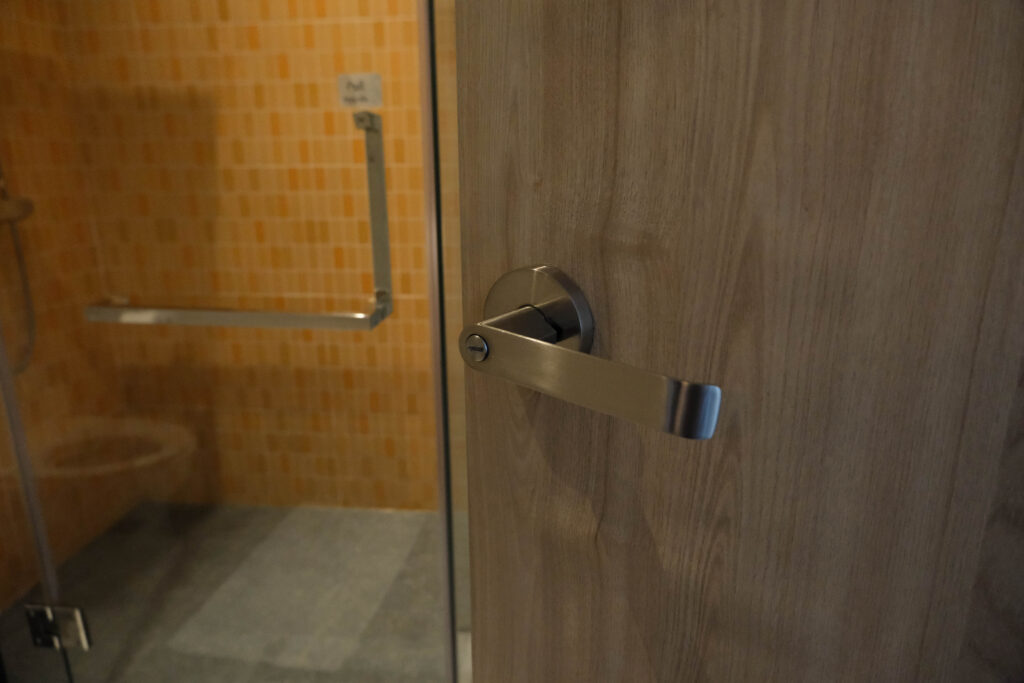
What About the Bathroom Door Frame?
Moisture reaches the bottom and sides of the opening first. For a lasting installation:
- Use a moisture-proof frame, not just a moisture-proof shutter.
- Seal and finish the joints properly.
- Check the floor level and drainage near the threshold.
- Choose hardware suited to humid conditions.
- Have the door aligned and fitted correctly.
Bathroom doors for Kerala’s climate
Kerala has heavy monsoons and humidity above 80% for much of the year, so untreated wood and plain MDF doors deteriorate quickly. Moisture and termite resistance should come first here, before looks. WPC and fibre both suit this climate. Ask any supplier for local installation references and a warranty in writing.
Questions to ask before buying
- Is the door designed for high-moisture areas?
- Is the frame moisture-resistant too?
- How does the bottom edge perform in standing water?
- Is it termite-resistant?
- What hardware is supplied?
- Can the finish be customised?
- What warranty is offered?
Why Choose i-LEAF WPC or Fibre Doors?
i-LEAF offers both WPC and fibre (FRP) doors, allowing homeowners to select a material based on the specific application. Its WPC doors and frames are designed with waterproof, termite- and borer-resistant properties and high screw-holding capacity. Its fibre doors are lightweight and moisture-resistant, making them suitable for bathrooms, kitchens and other high-humidity areas.
This means you can choose the door type based on the actual requirements of each room rather than using one material throughout the house.
FAQs
What is the best door for a bathroom in India?
WPC, fibre and PVC can all work. WPC suits durability and a timber-like look, fibre suits lightweight low-maintenance use, and PVC suits tight budgets.
Is WPC good for bathroom doors?
Yes. WPC is waterproof and termite- and borer-resistant. Product construction and installation still matter.
Are fibre doors good for bathrooms?
Yes. Fibre/FRP doors are lightweight, moisture-resistant and made for bathrooms and kitchens.
Which is better for a bathroom, WPC or fibre?
WPC gives a sturdier, wood-like door with better screw-holding. Fibre is lighter and simpler to maintain.
Are PVC bathroom doors durable?
They can be, but quality varies. Check thickness, construction, hardware and frame.
Should a bathroom door be completely waterproof?
Moisture resistance matters, but the whole assembly counts: shutter, frame, edges, hardware, installation and floor conditions.